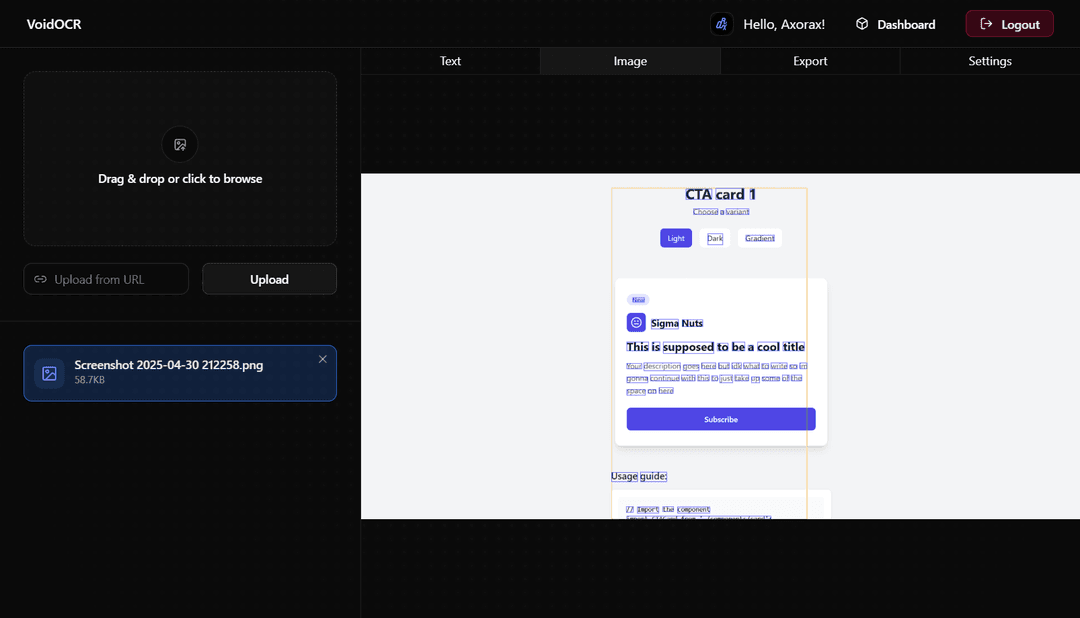
What is OCR?
Published on 2025-05-02
OCR (Optical Character Recognition) is technology used to identify written or printed text in any of several different forms—such as scanned documents, photographs, or PDFs—and to express it in editable digital text and machine-readable text.
How Does OCR Work?
The following are the typical steps in an OCR system:
Image Acquisition The paper is photographed or scanned using a camera or scanner.
Preprocessing Techniques like grayscale conversion, noise removal, and thresholding are applied to improve legibility and readability of text.
Text Recognition The software recognizes lines, words, and characters. It matches them against character patterns by machine learning or pattern matching.
Post-processing Language models or dictionaries may be utilized to correct misrecognized words and improve accuracy.
Common Uses of OCR
- Converting printed books and documents into digital formats
- Simplifying data entry from forms and invoices
- Pulling text from identification documents
- Making scanned PDFs searchable
Benefits of OCR
- Efficiency: Speeds up document handling and data processing.
- Accessibility: Enables screen readers to interpret printed text.
- Searchability: Changes documents into formats that can be easily searched.
- Storage & Archiving: Reduces the need for physical storage by digitizing records.
Conclusion
OCR is a fantastic tool that bridges the gap between analog and digital information, resulting in faster workflows, better data accessibility, and smarter document management.