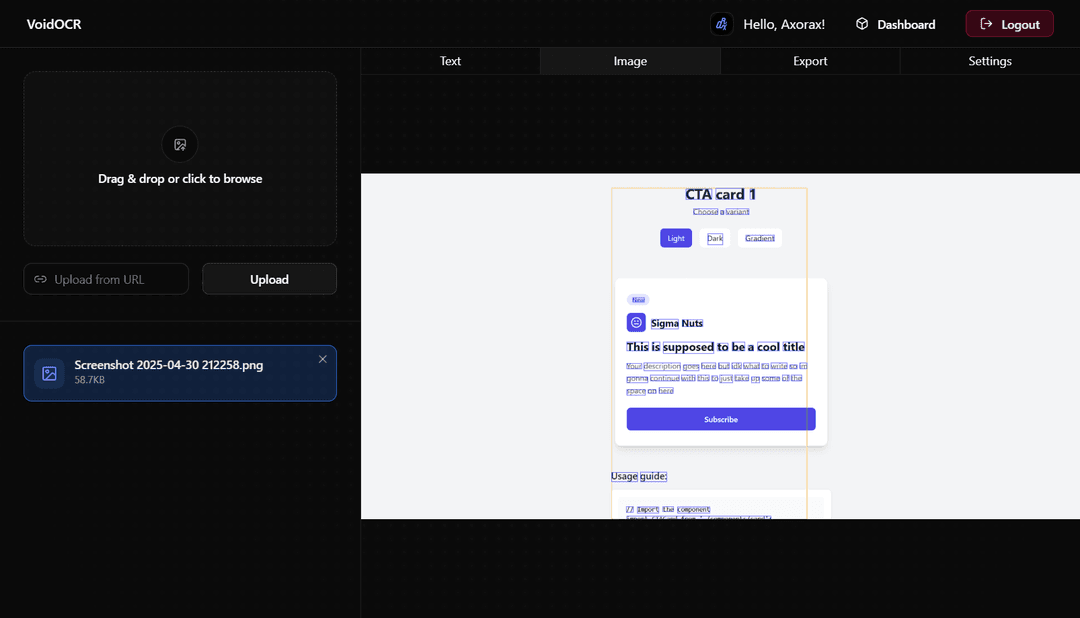
The Benefits of OCR: Why Optical Character Recognition Matters in the Digital Age
Published on 2025-05-01
Optical Character Recognition (OCR) technology has changed how we look at documents and information. It has many beneficial aspects, from converting traditional manuscripts to digitized files to streamline the data entry process for many modern organizations, OCR enables workflows, reduces human error, and provides data access that was long locked away. In today's digital and data-rich world, the value of OCR has never been so significant.
What is OCR, in short?
OCR is the ability to convert an image of a text—regardless of whether it's a scanned page, printed picture, or handwritten note—into a machine readable and editable digital file. There are many variations of OCR software in the market, however, all of them perform the same functions: OCR software looks at the structure of text in an image, analyzes the structure for characters/words, then utilizes them to turn the image into structured and usable data.
Let's think of the summarized major benefits of why OCR is an important part of today's digital age.
1. Enhanced Speed and Efficiency
It takes a lot of time, effort, and money to manually type data. OCR makes it so that you don't have to manually enter data by auto-reading and digitization. It saves processing time significantly and allows you to focus on actual stuff.
Example
- A bank can process thousands of checks or invoices in a day using OCR.
- Patient records can be indexed and digitized within seconds in the healthcare sector.
2. Cost Savings Over Time
nstallation of optical character recognition (OCR) solutions is capital intensive initially, but money-saving potential is immense subsequently. Companies avoid labor costs, storage expense, printing expense, and handling of paper documents. Also, fewer human errors translate to lower costs and hours being spent on correction and reprocessing.
Key Cost Savings:
- Decreased administrative overhead
- Reduced paper and printing costs
- Reduced demand for physical storage space
3. Enhanced Data Accuracy and Consistency
Human error is, by far, one of the most common causes when it comes to data entry errors. OCR technology, particularly the variant equipped with machine learning and artificial intelligence, stands for much reliability. The most up-to-date OCR software employs context detection to spot and correct errors, thus ensuring the best quality for data.
Benefit:
- Data will be cleanly formatted and ready for analytics, reporting, or assisted integration into computer systems.
4. Enhanced Searchability and Data Accessibility
A scanned document using OCR becomes searchable after it has been digitized. Information can be searched quickly using keywords by users rather than searching through paper pages.
Applications:
- Law firms downloading case files
- Journalists digging through archives
- Librarians cataloging historical manuscripts
5. Space-Saving and Paperless Conversion
Digitization of paper files reduces the space for filing cabinets, storage, and paper file systems. Digitalization supports green initiatives and working remotely by storing all documents in a digital form.
Environmental & Practical Benefits:
- Reduced carbon footprint
- Easy file sharing and collaboration
- Backup data from the cloud
6. **Integration with Business Systems
OCR not just recognizes text—it may even be configured to recognize structure, such as invoice numbers, addresses, or line items. This can be used for seamless integration with enterprise software systems such as CRMs, ERPs, and document management systems.
Integration Use Cases:
- Bringing customer data from forms into a CRM
- Importing line items from purchase orders into accounting software
- Synchronizing scanned contracts with document workflows
7. Multilingual and Global Capabilities
Modern OCR software can now handle dozens of languages, including intricate writing systems like Chinese, Arabic, and Devanagari. It is thus extremely valuable to multinational organizations with documents in multiple languages.
Use Case:
- A global insurer handling automatically received foreign language-based claims within the native countries.
8. Improved Customer Experience
OCR shortens customer-related process timelines for such activities as onboarding, approval of applications, or requests for assistance. Automated document handling means faster, more accurate service to the customer.
In Action:
- A bank can approve a loan application within minutes rather than days.
- Customers are able to upload IDs or documents via mobile, which are immediately processed by OCR.
9. Compliance and Audit Readiness
With regulations like GDPR, HIPAA, and SOX requiring strict document management processes, OCR keeps organizations compliant. Digitized, indexed documents are easier to track, retrieve, and secure, making them more transparent and audit-ready.
Benefits:
- Tamper-evident electronic audit trails
- Easy e-discovery during legal audits
- Permission and access control systems
10. Accessibility and Inclusivity
OCR is vital in facilitating information availability to blind and visually impaired persons. Scanned document text can be read aloud by screen readers or be translated into Braille, facilitating greater inclusive access to written content.
Impact:
- Education materials can be made available for the learning needs of all
- Government documents can be made available for all citizens
OCR is more than an convenience—OCR is a digital transformation catalyst. By tapping the value locked away in paper and unstructured documents, OCR helps businesses, institutions, and individuals work faster, smarter, and more securely. Whether saving time, money, improving compliance, or improving customer experience, the advantages of OCR are future-forward and wide-ranging.
Organizations that implement OCR today aren't merely converting documents to digital—they're converting opportunity to digital.